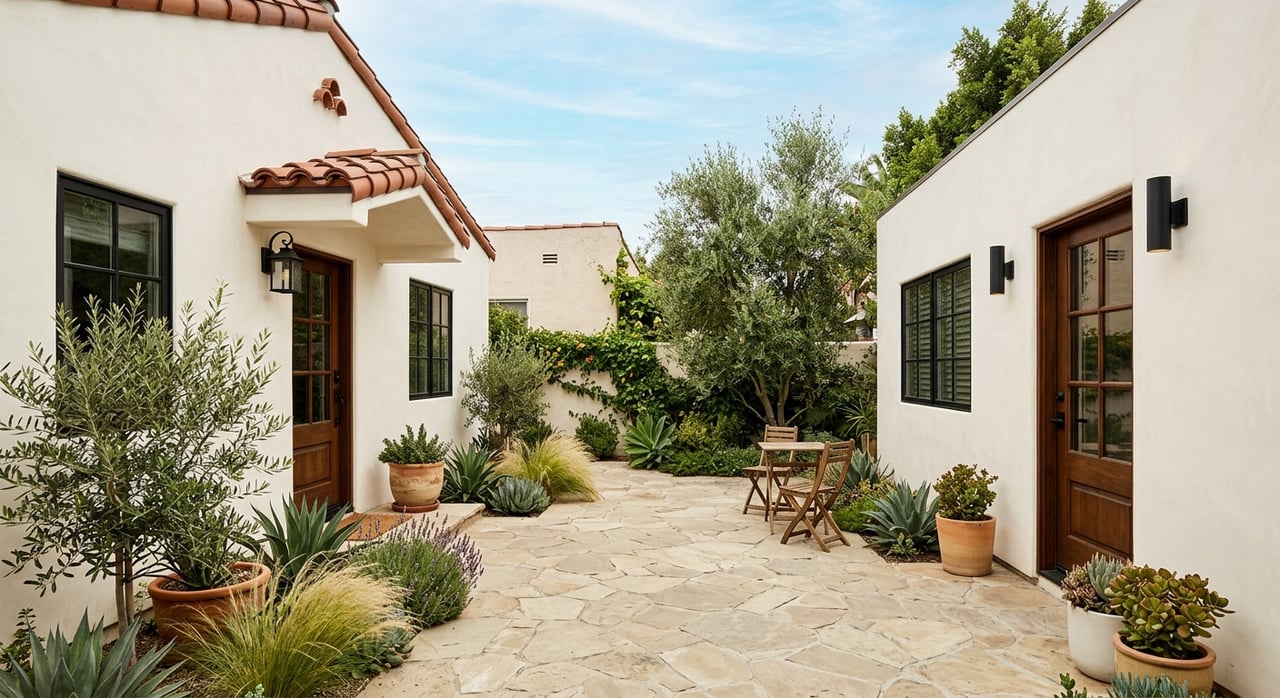
If Altadena home prices make you wonder whether buying can still pencil out, house hacking may be worth a closer look. In a market where owner-occupied homes have a median value of $1,120,000 and median monthly owner costs with a mortgage reach $3,430, many buyers are looking for ways to offset part of that monthly payment. The key is to approach the idea realistically, with a clear understanding of zoning, permits, rental rules, and wildfire-related carrying costs. Let’s dive in.
What house hacking means in Altadena
House hacking simply means buying a home with income in mind. That could mean renting a room in your primary residence, using a legally permitted ADU, or buying a property with a layout that supports a separate living area.
In Altadena, that strategy usually works best as a monthly cost offset, not as a promise that rent will fully cover your mortgage. Recent local data shows median gross rent at $2,355 in the Census and average asking rent around $3,200 in Zillow’s April 2026 rental snapshot, while Redfin reported a median sale price of about $1.1 million in March 2026. In other words, the numbers can help, but they still need conservative underwriting.
Altadena also has a strong ownership base. According to Census QuickFacts for Altadena, the owner-occupied housing rate is 76.9%, which helps explain why many buyers here think about house hacking as a long-term flexibility play rather than a pure investor model.
Why parcel details matter
One of the biggest mistakes buyers make is assuming a neighborhood label tells them what they can build or rent. Altadena is in unincorporated Los Angeles County, so land use and zoning are controlled by LA County, not a city planning department.
That means the exact parcel matters. As Los Angeles County Planning explains, zoning and land use rules determine what kinds of residential uses are allowed. In practice, you want to verify the property’s zoning, overlays, and any applicable local standards before you count on adding or renting a second unit.
This is especially important because Altadena is also affected by supplemental county standards, including the Altadena Community Standards District and the West San Gabriel Valley Area Plan update adopted in 2025. If you are buying for income potential, due diligence on the lot is just as important as the home itself.
Best property types for house hacking
Room rentals in an owner-occupied home
Renting a room can be the simplest version of house hacking. It may not create the same privacy or income as a separate unit, but it can lower your monthly housing cost without requiring major construction.
This setup also matters from a compliance standpoint. The County’s Rental Housing Habitability Program requires routine inspections for rental housing units in unincorporated areas, but it does not apply to owner-occupied units where a room is rented. That makes room rental very different from operating a separate rental unit.
ADUs and JADUs
For many buyers, the most appealing house-hacking setup is a legal second unit. LA County defines an accessory dwelling unit, or ADU, as a unit with a full kitchen and bathroom that is accessory to residential use. It can be attached or detached.
The County also defines a junior accessory dwelling unit, or JADU, as a smaller unit of up to 500 square feet located within the main home and with its own exterior access. If a space does not meet those definitions, it may be useful flex space, but it should not be treated as a legal rental unit.
That distinction matters a lot in Altadena. A guest suite, finished garage, or bonus room may look promising online, but if it is not legally configured and permitted, your income plan may not hold up.
Duplexes and small multi-unit options
Buyers with a small-investor mindset may also look at duplex-style properties. LA County notes that duplexes are permitted in the R-2 zone, which can make them attractive for buyers who want a more established two-unit setup.
Still, zoning is only the beginning. According to the County’s R-2 zone guidance, parcel-specific rules and supplemental standards can change what is actually feasible. A property marketed as having “income potential” still needs verification before you rely on that potential.
Floor plans that work better
Not every house is a good house-hacking house. The layouts that tend to work best are the ones that create real separation between your space and a tenant’s space.
When evaluating a property, pay close attention to:
- Separate entry or exterior access
- Clear circulation that does not force constant overlap
- A functional kitchen and bathroom setup for the rental area
- Parking configuration
- Whether the space feels private enough for long-term use
County guidance on ADUs and JADUs makes access, site fit, and parking central issues. If a tenant has to walk through your living room to get home, the setup may be technically possible but operationally awkward.
Parking and garage conversions
Parking can make or break the plan, especially on smaller lots. Under LA County’s current ADU framework, parking requirements vary depending on site conditions.
County materials explain that no parking is required for an ADU outside a Very High Fire Hazard Severity Zone, while one uncovered parking space is required inside a VHFHSZ unless an exemption applies. The County also states that if a garage, carport, or covered parking structure is demolished or converted for an ADU, replacement parking is not required. You can review those details in the County’s ADU rules and summary materials.
For Altadena buyers, this is a major underwriting issue. A garage conversion may look like an easy path to income, but you still need to understand how fire-zone rules and site layout affect the final result.
Permits and timelines to understand
If your plan includes creating or legalizing a second unit, timing matters. LA County says its ADU ordinance amendment was approved in October 2024 and became effective on August 28, 2025.
The County also states that a decision on an ADU or JADU application is generally made within 60 days of a complete application. That is helpful, but it does not mean every property is equally straightforward. Site constraints, fire-zone requirements, and property-specific review can still affect the process.
In practical terms, buyers should think in two phases:
- Pre-purchase feasibility, where you verify zoning, layout, and likely permit path.
- Post-purchase execution, where you budget for plans, approvals, and construction or conversion work.
If you skip the first phase, the second can get expensive fast.
Rental rules that affect your income
Projected rent is only useful if you understand the rules tied to that rental setup. In California, landlord-tenant law can affect rent growth, notice requirements, and whether just-cause rules apply.
The California Department of Real Estate’s California Tenants guide explains that the Tenant Protection Act generally caps annual rent increases at 5% plus inflation, or 10%, whichever is lower, and requires just cause for covered tenancies. It also notes important exemptions, including some owner-occupied arrangements, some duplex setups, and housing issued a certificate of occupancy within the previous 15 years.
That means the legal structure of the property matters just as much as the rent number. A room rental, ADU rental, and duplex tenancy can each have different compliance and operational implications.
The wildfire recovery factor
Altadena buyers also need to account for current recovery conditions after the Eaton Fire. Purchase price is only part of the picture if a property’s use, rebuild path, or site condition affects your timeline.
LA County’s disaster recovery resources explain that the County has created one-stop permit centers and rebuild consultations for Eaton Fire survivors. The County also notes that its disaster-recovery ordinance allows temporary housing and accessory structures on properties that contained a legally established single-family residence, ADU, caretaker’s residence, or farmworker dwelling unit.
For buyers, this adds another layer of due diligence. In some cases, rebuild timelines and permit pathways may matter just as much as square footage when you are buying with income in mind.
Why insurance needs to be in your math early
In wildfire-exposed areas, insurance is not a line item to estimate later. It is part of the deal’s core affordability.
The California Department of Insurance notes that new wildfire-resilience and insurance-protection laws took effect on January 1, 2026, reflecting ongoing changes in the state’s insurance market and FAIR Plan framework. For Altadena buyers, that means insurance quotes should be part of your underwriting from the start.
If projected rental income is the reason a purchase feels workable, rising insurance costs can change the picture quickly. Conservative numbers usually win here.
A smart way to evaluate house hacking
The strongest Altadena house-hacking strategy is usually the simplest one on paper and the most defensible in real life. You want a property where the income setup is legal, the layout feels naturally separate, and the monthly math still works if rent comes in lower than hoped.
A good buyer checklist includes:
- Confirming zoning and parcel-specific standards
- Verifying whether the existing space is a legal ADU, JADU, room rental setup, or neither
- Reviewing parking and fire-zone implications
- Estimating realistic rent, not best-case rent
- Pricing insurance early
- Understanding whether state rent cap and just-cause rules may apply
That kind of planning is where house hacking becomes a strategy instead of a gamble.
Bottom line for Altadena buyers
House hacking in Altadena can absolutely make sense, but it works best when you treat it as a cost-offset and flexibility strategy, not a shortcut to effortless cash flow. In a market where home values are high and carrying costs can shift based on insurance, permits, and legal use, the details matter.
If you are considering a home with an ADU, a possible garage conversion, a rentable room setup, or a duplex-style layout, careful property analysis can save you time and money. Working with an agent who understands both the neighborhood context and the practical side of small-investor decision-making can help you avoid expensive assumptions. If you want a thoughtful, no-pressure conversation about whether a specific Altadena property fits your goals, connect with Isabelle Clark.
FAQs
What does house hacking in Altadena usually look like?
- It usually means buying a primary residence and offsetting part of your monthly cost through a room rental, a legal ADU or JADU, or a duplex-style setup, rather than expecting full cash flow.
Can a room rental count as house hacking in Altadena?
- Yes. Renting a room in an owner-occupied home is a common version of house hacking, and LA County’s Rental Housing Habitability Program does not apply to owner-occupied units where a room is rented.
Does a guest suite count as a legal rental unit in Altadena?
- Not automatically. A guest suite only functions as a true dwelling unit if it meets LA County’s ADU or JADU definitions and applicable permitting requirements.
Do Altadena buyers need to check zoning before buying for house hacking?
- Yes. Because Altadena is in unincorporated Los Angeles County, parcel-level zoning, overlays, and supplemental standards can affect whether a second unit or duplex-style setup is allowed.
Do parking rules affect ADU plans in Altadena?
- Yes. LA County’s ADU rules can change parking requirements based on site conditions, including whether the property is in a Very High Fire Hazard Severity Zone.
Do California rent caps apply to house hacking properties in Altadena?
- Sometimes. The California Tenant Protection Act often applies, but there are exemptions for some owner-occupied arrangements, some duplexes, and some newer housing, so the specific tenancy structure matters.
