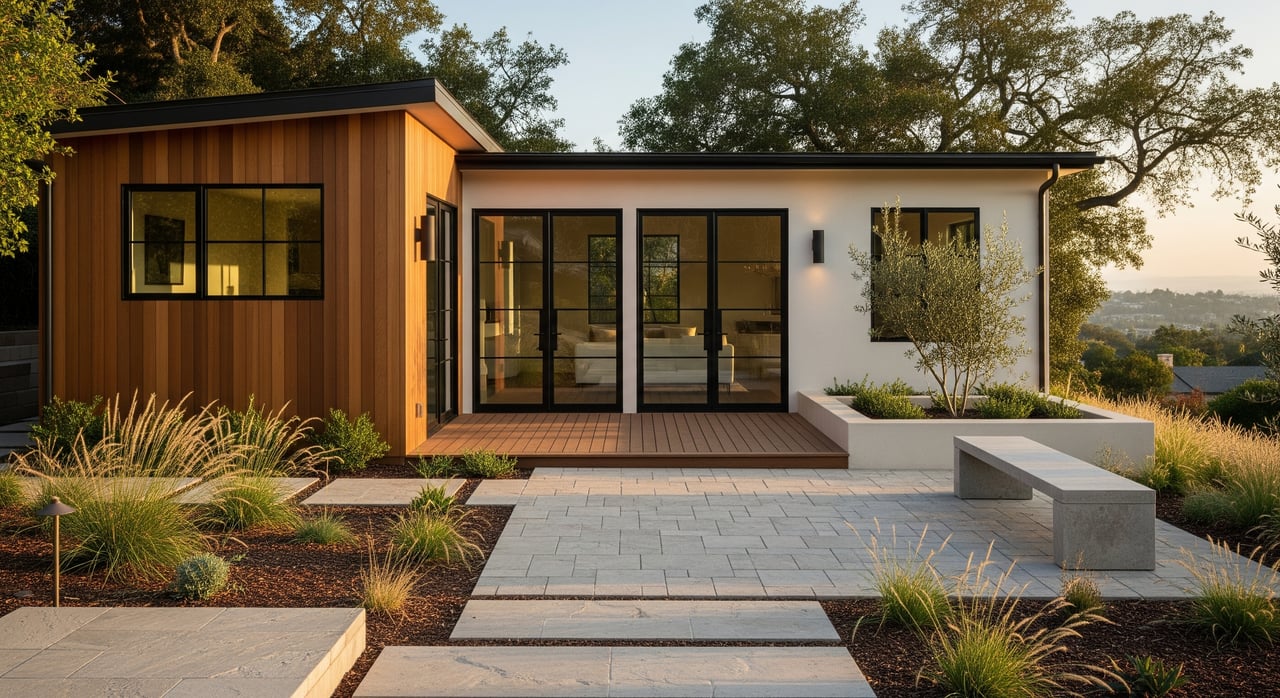
Thinking about adding more space or a steady rental in your Altadena backyard? An accessory dwelling unit can be a smart, flexible way to grow your living options and long-term value. If you live in Altadena, you also know the terrain, wildfire risk, and utilities are unique, which is why planning matters. In this guide, you’ll learn the key rules, site checks, costs, timeline, and a simple checklist to move forward with confidence. Let’s dive in.
What is an ADU?
An accessory dwelling unit is a secondary home on the same lot as your primary residence. It can be a standalone backyard cottage, an addition attached to your main house, or a conversion of existing space.
Common ADU types
- Detached ADU: A new, separate structure, often in the backyard.
- Attached ADU: An addition that shares a wall with your main home.
- Conversion ADU: A finished unit created from existing space like a garage, basement, or accessory structure.
- Junior ADU (JADU): Up to 500 square feet carved out within your existing single-family home, typically with specific owner-occupancy and kitchenette rules.
ADUs must meet California building codes under Title 24, including structural, energy, and life-safety standards. For code context, review the California Building Standards Commission’s resources on Title 24 to understand the baseline building requirements that apply throughout the state.
- Learn more about California’s statewide ADU framework and policy context via the California Department of Housing and Community Development.
- For building code standards, see the California Building Standards Commission.
Who regulates ADUs in Altadena
Altadena is unincorporated Los Angeles County. This means county zoning and permit rules apply, not the City of Pasadena or City of Los Angeles. While state law has opened the door for ADUs statewide, the county still controls siting, setbacks, height, grading, fire requirements, and permit procedures.
- For zoning, siting standards, and permit guidance, start with the Los Angeles County Department of Regional Planning.
- For fire clearance, defensible space, and Wildland-Urban Interface requirements, consult the Los Angeles County Fire Department.
State law limits how much local governments can restrict ADUs and includes rules on size, streamlining, and parking. Because statutes evolve, confirm the current language and local practice before you design. The state’s ADU portal at the California Department of Housing and Community Development is a helpful overview.
Key site factors in Altadena
Altadena’s foothill setting is beautiful, but it adds complexity. Your site’s slope, utilities, and fire zone can shape feasibility, design, and cost.
Slope, grading, and retaining walls
Hillside lots can trigger grading permits, engineered retaining walls, and geotechnical studies. Seismic and slope stability reviews are common. These items affect both cost and timeline, so budget early for surveys and engineering. For grading, stormwater, and road-adjacent work, review Los Angeles County Public Works guidance.
Utilities, sewer, and meters
Determining sewer availability is one of the first steps. Many Altadena parcels are on sewer, but some remain on septic. A sewer connection is often simpler if available, and conversions or extensions can require county review and fees. You may also need to assess your water meter size, electrical panel capacity, and gas service. For sewer, curb, and utility coordination, engage Los Angeles County Public Works and your local water district.
Fire and Wildland-Urban Interface
Parts of Altadena lie in high fire risk areas. The county may require defensible space, ignition-resistant materials, and clear access for emergency vehicles. Brush clearance and landscaping rules can influence where an ADU will fit on your lot. For standards and inspections, contact the Los Angeles County Fire Department.
Historic and scenic overlays
If your property is in a historic overlay or scenic area, additional design review may apply. These standards can affect placement, height, and exterior finishes. Confirm early with Los Angeles County Department of Regional Planning so you can plan design choices that meet local review.
Setbacks, size, and placement
ADU size limits and placement rules depend on your parcel’s zoning and county standards within state bounds. Rear and side setbacks often apply to detached ADUs, and height limits can vary by area. Two-story ADUs can be possible but face more constraints in hillside or scenic zones. Before you start design, verify your parcel’s zoning and applicable standards with Los Angeles County Department of Regional Planning.
Parking, access, and curb cuts
What state law says about parking
California law restricts how much local agencies can require parking for ADUs, especially near transit or for conversion ADUs. In many cases, additional parking is not required. Because rules have details and exceptions, review the statewide policy overview from the California Department of Housing and Community Development and confirm with the county during pre-application.
Driveways, alleys, and practical realities
Altadena has narrow streets and limited curb frontage in many neighborhoods. You may need county review for driveway expansions, new or modified curb cuts, and safe maneuvering. Tandem parking may be considered in some cases. For curb cuts, driveway upgrades, and roadway impacts, coordinate with Los Angeles County Public Works.
HOA and neighborhood context
If you live in an HOA community, check the CC&Rs for rental rules, architectural review, and exterior standards. Private covenants can add restrictions even when the county allows an ADU. It helps to loop in neighbors early and use privacy landscaping or thoughtful window placement to keep the project collaborative.
Costs, financing, and value
What drives cost in Altadena
Several factors influence your total budget:
- Slope and grading: Steeper sites can require engineered foundations, retaining walls, and access solutions.
- Utilities: Sewer extensions, panel upgrades, and water meter changes can add costs.
- ADU type: Conversions usually cost less than new detached builds of the same size.
- Finishes and systems: Kitchens, baths, and energy code compliance shape your final number.
Hillside work, utility trenching, and fire-resistant materials can stretch timelines and budgets, so build a contingency.
Financing approaches to consider
Homeowners commonly use cash, HELOCs, cash-out refinances, construction loans, or specialized ADU financing where available. Lenders may consider your current equity and an after-improved value. If rental income is part of your plan, discuss underwriting assumptions with a mortgage professional early.
Property taxes and assessment
New construction typically increases assessed value, which can raise property taxes. For how the county handles reassessment and improvements, review guidance from the Los Angeles County Assessor.
Rental income and long-term value
ADUs can generate rental income and may boost overall property value. Actual impact varies by neighborhood, unit quality, and local demand. Build a conservative rent and ROI model, and remember to account for maintenance, insurance, and vacancy assumptions.
Landlord and operating rules
If you rent the unit, you must follow California landlord-tenant laws on things like security deposits, habitability, and eviction. Some areas have local rent controls, but unincorporated Los Angeles County is generally governed by state law. Short-term rental rules are separate from ADU permits, so check county ordinances and transient occupancy tax rules before marketing a short-stay.
Timeline and permit path
ADUs benefit from a state-driven push to streamline, but real timelines depend on your site and scope.
- Pre-application and feasibility: 2 to 6 weeks to confirm zoning, site constraints, and fire and utility factors with Los Angeles County Department of Regional Planning, Los Angeles County Fire Department, and Public Works.
- Design and engineering: 4 to 12 plus weeks, longer for hillside or geotechnical needs.
- County review and plan check: Several weeks to a few months. Complex hillside projects can take longer.
- Bidding and mobilization: 4 to 12 weeks to select a contractor and schedule work.
- Construction: Several months to over a year depending on site complexity and scope.
From early research through completion, most projects run 6 to 18 months. Hillside sites often sit at the longer end of that range.
A simple Altadena ADU checklist
Use this list to avoid surprises and set your project up for success.
- Confirm parcel zoning and ADU standards with Los Angeles County Department of Regional Planning.
- Check sewer versus septic status and consult Los Angeles County Public Works about connection requirements and fees.
- Contact your water district and utilities to confirm meter sizes, panel capacity, and service upgrades.
- Request a fire and WUI review with the Los Angeles County Fire Department to understand defensible space and access standards.
- Order a site survey and topographic map, and consider a geotechnical report for sloped sites.
- Review HOA CC&Rs, if applicable, for rental and exterior modification rules.
- Talk to neighbors early about privacy, access, and parking.
- Interview at least one local architect or ADU designer and one contractor experienced with hillside work for feasibility and budget input.
- Confirm whether any county pre-application options or ADU checklists are available through Los Angeles County Department of Regional Planning.
Smart next steps
Start with a short feasibility review. Verify zoning and site constraints, then get rough input from a designer and contractor so your budget reflects Altadena’s terrain and utility reality. If you plan to rent or you want to understand resale impact, build a conservative income and value model before you commit.
If you would like local, data-informed perspective on how an ADU could affect your property value or future sale, reach out to Isabelle Clark. Her practice focuses on strategic guidance and white-glove service that keeps your goals front and center. When you are ready to plan next steps or explore your home’s current market position, connect with Isabelle Clark for a friendly, no-pressure conversation.
FAQs
What to know about ADU rules in Altadena
- Altadena is in unincorporated Los Angeles County, so county zoning and permits apply, within a statewide ADU framework that limits local barriers; verify current standards with Los Angeles County Department of Regional Planning and the California Department of Housing and Community Development.
How ADU parking works near transit in California
- State law restricts local ADU parking requirements in many cases, especially near transit or for conversions, but you should confirm your specific situation with county staff using the HCD overview as context.
Whether a septic system must be upgraded or replaced
- If a sewer connection is available and required by county code, you may need to convert from septic; if sewer is not available, the county will set design conditions for an ADU on septic, so coordinate early with Los Angeles County Public Works.
Fire and wildfire rules for Altadena ADUs
- In higher-risk areas, defensible space, ignition-resistant materials, and clear emergency access may be required, so contact the Los Angeles County Fire Department early to guide siting and design.
How long a typical Altadena ADU takes
- From feasibility to move-in, most ADUs take about 6 to 18 months, with hillside and complex engineering pushing timelines longer due to grading, geotechnical review, and plan check.
Whether owner-occupancy is required for ADUs
- Recent state changes removed many owner-occupancy mandates for ADUs, but JADUs usually have specific conditions, so confirm the current local requirements with Los Angeles County Department of Regional Planning.
If ADUs are allowed for short-term rentals
- Short-term rental rules are separate from ADU permits and depend on county ordinances and tax rules, so verify the latest policies with Los Angeles County before marketing short stays.
